
Hearing Loss Is No Small Matter! Ignoring It May Accelerate Dementia and Cognitive Decline
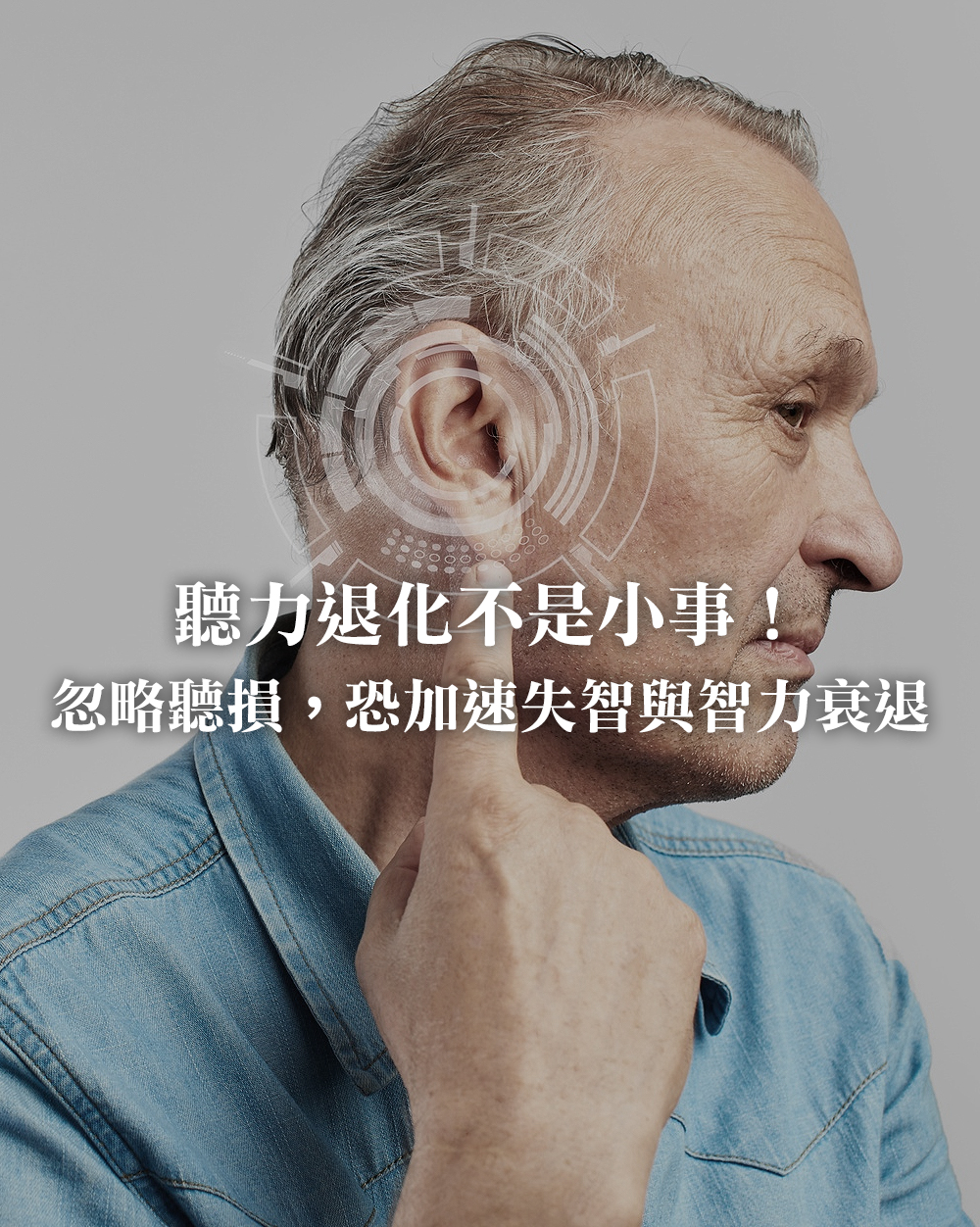
Many people assume declining hearing is simply part of aging, but research shows that hearing loss not only affects quality of life, it may also accelerate the decline of cognitive ability and memory, and even raise the risk of dementia. Early assessment and the appropriate use of hearing aids can not only improve hearing but also help maintain brain health and social capacity.
Why do most people who need hearing aids refuse to wear them?
Research shows that of every 5 people who need a hearing aid, only about 1 actually wears one; even in countries that offer subsidies, the rate of use remains low. Common reasons include:
1 | Not realizing their own hearing has declined
Hearing loss is usually gradual, so patients and their families tend to adapt little by little and overlook that there is a problem.
2 | Fear of being labeled as "aging"
Many people equate hearing aids with being old and worry it will affect their confidence or appearance.
3 | Believing hearing aids are difficult to operate
Some older adults think hearing aids are complicated to use, or lack confidence with new technology, and therefore resist wearing them.
In reality, however, the impact of long-term neglect of hearing problems on health is far greater than imagined.
Hearing loss is closely linked to cognitive decline
Medical research indicates that the more severe the hearing impairment, the faster cognitive ability declines. This is because:
1 | The brain is deprived of sound stimulation over the long term
After hearing declines, the brain receives fewer sound signals, which reduces brain stimulation and leads to a gradual deterioration of cognitive function.
2 | Reduced social interaction increases the risk of isolation
Not hearing clearly easily leads to:
- Reduced interaction with others
- Avoidance of social activities
- Increased loneliness and risk of depression
These factors may further affect brain health and raise the likelihood of developing dementia.
Poor hearing affects quality of life far more than imagined
Many patients experience a marked improvement in quality of life after their hearing improves, including:
- Smoother conversations with family
- Being able to take part in social activities again
- Greater willingness to go out and travel
- Increased confidence and sense of security
- Fewer misunderstandings and less communication stress
Hearing clearly is not just a matter of convenience; it also relates to mental health and interpersonal relationships.
When should you consider a hearing assessment?
If any of the following occur, it is advisable to undergo professional testing early:
- Frequently unable to hear what others say clearly
- Often asking others to repeat themselves
- Difficulty understanding conversations in crowded settings
- Turning up the TV or phone volume higher and higher
- Able to hear sound, but unable to understand the content
- Finding it difficult to talk on the phone
- Feeling that others' speech is "muffled and unclear"
These are all important warning signs of early hearing loss.
Hearing aids do more than let you "hear" — they protect the brain
Modern hearing aid technology has advanced significantly and now features:
- Miniaturized designs that are hard to notice
- Automatic volume adjustment
- Background noise reduction
- Improved speech clarity
- Personalized hearing adjustment
Using a hearing aid appropriately not only improves hearing but also helps to:
- Maintain brain activity
- Slow cognitive decline
- Enhance overall quality of life
The earlier you address hearing problems, the better the outcome
If hearing loss goes uncorrected for a long time, the brain may gradually lose its ability to recognize sound, and even if a hearing aid is worn later on, it may take longer to adapt.
Therefore, early detection and early treatment are key to maintaining both hearing and brain health.
Hearing loss is not merely a phenomenon of aging, but a health issue that deserves attention. Through regular hearing tests and appropriate assistive-device intervention, you can not only improve hearing quality but also reduce the risk of cognitive decline and dementia, while maintaining a good quality of life and social capacity.
If you experience hearing-related concerns, it is advisable to seek a professional assessment as early as possible, so that hearing and brain health are safeguarded together.