
The Key to Reversing Joint Degeneration: Starting From Diet and the Root of Inflammation
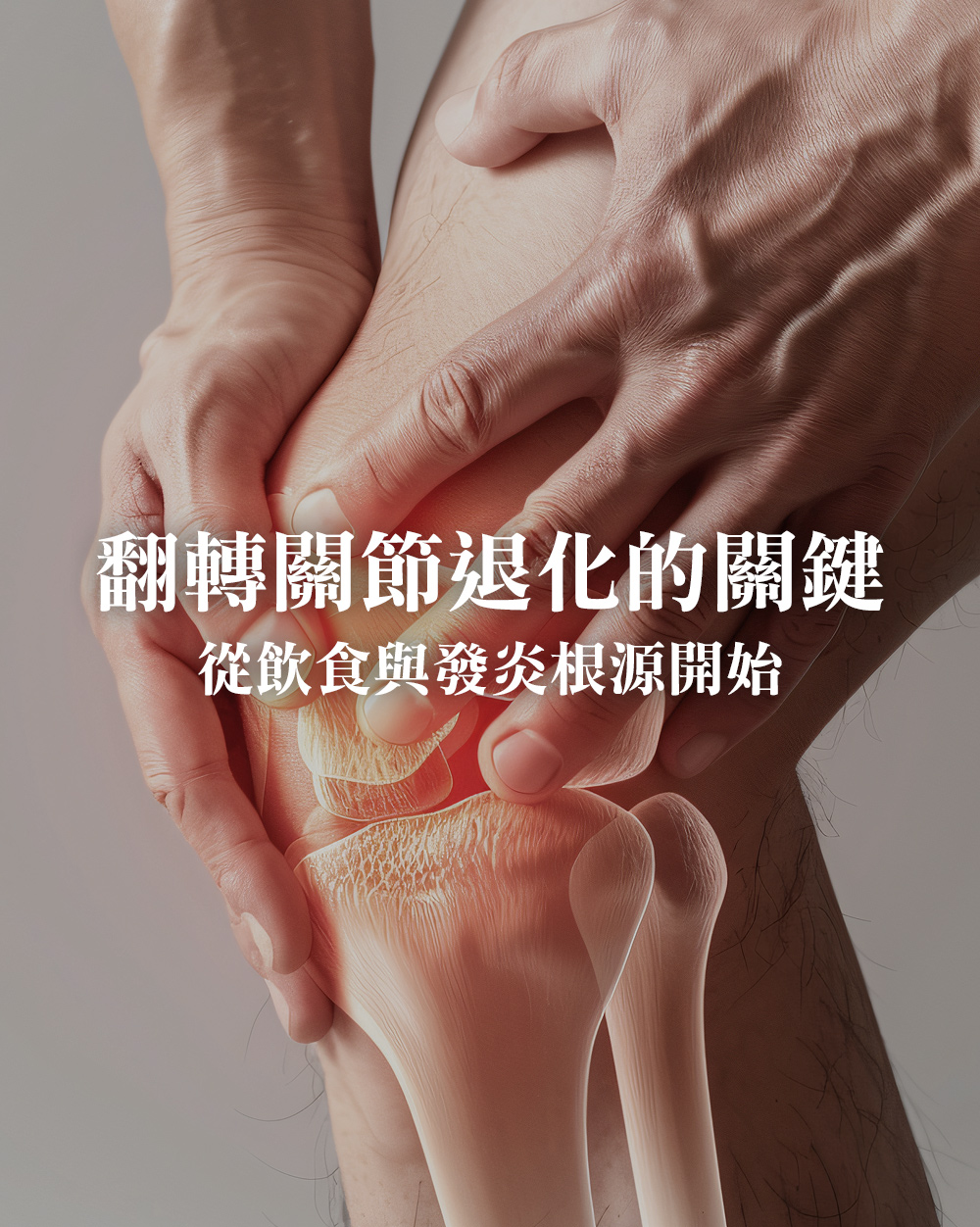
A clicking sound every time you squat? Joint degeneration is not necessarily about old age, but about problems with your lifestyle.
Many people hear a "clicking" sound in their joints when squatting or moving, and instinctively assume it is a natural phenomenon of aging bones. However, clinical observation finds that whether joints degenerate early is not necessarily proportional to age, but is instead closely related to muscle mass, dietary habits, and metabolic status.
There was once a 90-year-old who came to the clinic to be examined for osteoarthritis; despite being very advanced in age, the knee joints showed almost no signs of degeneration. On closer inquiry, it turned out that he had maintained a regular swimming habit for many years, with well-developed lower-limb muscles that provided good support and protection for the joints, so he could still move freely even at an advanced age.
Conversely, clinically there are also frequent cases of people under 40 who already have severe osteoarthritis, mostly related to jobs requiring prolonged standing, obesity, and a high-sugar, high-fat diet. This shows that joint health is not simply determined by age, but is the cumulative result of long-term lifestyle.
Joint Degeneration Is Not Exclusive to the Elderly: Obesity Is the Truly Critical Risk
Many people think osteoarthritis is an "aging disease," but recent research has found that obesity and metabolic problems are the main drivers.
Statistics show:
- For most patients who undergo joint-replacement surgery, the main reason is obesity or being overweight
- The risk of needing a joint replacement due to obesity can be up to 20 times higher than that of the general population
- Even in non-weight-bearing joints such as the fingers, obese individuals may still show obvious degeneration
The reason is not only that added weight increases the burden on the joints, but more importantly:
Fat cells release inflammatory substances that accelerate cartilage destruction and affect the body's ability to repair itself.
3 Major Early Warning Signs of Osteoarthritis
Osteoarthritis usually progresses slowly, and early symptoms are easily overlooked. If the following situations occur, you should be more vigilant:
1|Unable to Walk or Stand for Long Periods
- Feeling discomfort after standing or walking for a while
- A noticeable decline in activity endurance compared with the past
- Easily fatigued during travel or daily activities
2|Joint Stiffness in the Morning
- Joints feel stiff when getting up in the morning
- It takes a period of movement before they gradually ease
3|Abnormal Sounds in the Joints
- A "clicking" sound during movement
- Sometimes accompanied by a sensation of catching or difficulty fully straightening
If several symptoms appear at the same time, it is advisable to assess joint health early.
The 5 Major Inflammatory Drivers of Osteoarthritis
Osteoarthritis is not simply "wear and tear," but a disease closely related to systemic inflammation and metabolism. The main risks can be summarized into the following five factors:
1|Metabolic Diseases (Obesity and Insulin Resistance)
This is the most important controllable factor.
Obesity causes:
- Fat cells to release inflammatory substances
- A decline in cartilage repair capacity
- Chronic inflammation that continuously damages the joints
At the same time, insulin resistance also affects:
- Energy metabolism of cartilage cells
- Increased pain sensitivity
- Accelerated joint degeneration
2|Increasing Age
As age increases:
- The function of the cellular energy system (mitochondria) declines
- Cartilage repair capacity weakens
- The rate of repair becomes slower than the rate of destruction
3|Poor Posture and Muscle Weakness
Common problems include:
- Weak quadriceps
- Long-term poor posture (such as walking with the feet turned out, or sitting cross-legged)
- Repetitive joint use (such as prolonged hand operation)
These can all increase uneven joint loading and the risk of degeneration.
4|Previous Injury or Surgery
Past joint injury or surgery may lead to:
- Premature aging of cartilage cells
- A decline in repair capacity
- Earlier onset of degeneration
Therefore, rehabilitation and protection after a joint injury are very important.
5|Genetic and Congenital Factors
Some joint degeneration is related to congenital factors such as:
- Hip dysplasia
- Women having less muscle mass
- Differences in hormones and pelvic structure
Although these cannot be changed, onset can still be delayed through lifestyle.
Can Osteoarthritis Be Reversed? The Key Lies in "Addressing the Root Cause"
Many people think osteoarthritis can only be managed with pain relief and cannot be improved, but clinical experience shows that if you address the root cause, there is a chance for symptoms to improve.
There was once a patient whose imaging showed grade-three degeneration. After undergoing:
- Dietary adjustment
- Weight management
- Regular exercise
- Rehabilitation training
- Appropriate medical treatment
Follow-up found that cartilage thickness gradually improved, and symptoms were also significantly reduced.
This shows that joint degeneration is not irreversible, but requires a comprehensive treatment strategy.
Why Do Many People Still Have Recurring Flare-Ups After Treatment?
The common reason is:
Treating only the site of pain, while ignoring the true cause.
If you only target local anti-inflammatory pain relief for the knee, without improving the following conditions:
- Obesity
- Chronic inflammation
- Insulin resistance
- Poor posture
- Insufficient muscle strength
Symptoms tend to recur.
Therefore, truly effective joint treatment should start with whole-body metabolic and inflammation management.
The Core Keys to Keeping Joints Young
Based on overall clinical observation, preventing joint degeneration can begin from the following directions:
- Maintain a healthy weight
- Increase muscle mass, especially lower-limb strength
- Adjust the diet, reducing high-sugar and high-fat intake
- Avoid long-term poor posture
- Address joint injuries early
- Regularly assess joint health
As controllable factors are improved one by one, there is still a chance to maintain good joint function even as age increases.